
There are modern comforts here too though, including en suites in two of the bedrooms, one of which has a Jacuzzi bath.
Unfortunately, too many homeowners do not want to pay for the expertise needed to fix the problems they may have with their existing hydronic systems, because they do not trust it will be done correctly, said Bent.
You don’t have to compromise your comfort for the health of the planet or your wallet. Through the five techniques listed above, you’ll save on your energy expenditure and monthly utility bill, preserving the warmth in your home while managing your carbon footprint. A small change makes a big difference — and sustainability starts in the home.
Ecobee is rolling out an update for its ecobee3 smart Wi-Fi thermostat that enables HomeKit compatibility for its motion and temperature sensors. Now you can use the individual sensors as HomeKit-enabled accessories of their own, increasing your home automation possibilities!
One thing is for sure, no matter where Florence eventually goes, more rain is expected but isn’t needed.
Radiant ceilings and radiant wall panels can also be added in selective areas of a house with older heat emitters, such as baseboard or cast-iron radiators, said Siegenthaler.
Raed Shuwayhat, director of engineering at Fairmont Austin in Texas, says hot water is considered to be 120 degrees Fahrenheit. That is maintained through pressure- and temperature-regulated variable-speed pumps for both hot and cold water systems. The hotel has 1,048 guestrooms on almost 30 floors.
IAQ equipment supported: Supports a humidifier and high-efficiency filters and has a height of 33 inches, which allows the unit to support various IAQ solutions. Compatible with Lennox’s PureAir products, including the latest introduction of the PureAir S whole home air purification system, which features purification efficiency of MERV 16.
John Weaver of BBQr’s Delight Wood Pellets said the price drop of pellet grills in the past few years has caused his barbeque pellet sales to skyrocket. “It’s a very good business,” he said. Panelists noted that even if barbequers don’t own a pellet grill, they can still use pellets. “Wrap them in foil and poke holes in it,” Robinson said. Lisle said a boots-on-the-ground strategy can be employed to promote pellets for grilling. “You can feed people directly,” he said. “Let them know they don’t have to taste petroleum anymore.” Robinson said not only does food taste better, but pellet grillers may not even realize they are cooking with green energy. Grilling pellets fetch higher prices than heating pellets because, as Weaver pointed out, consumers are buying them for flavor and convenience, not Btus. Also, with bagged heating pellets, the market is more regional whereas the barbeque pellet market is national and beyond. “The whole world is your market,” Weaver said. Robinson said with barbeque pellets, consumers care less about brands, and Weaver added availability trumps brands. Robinson said availability affects retailers. “If a consumer goes to a store to buy barbeque pellets and they don’t have it, they’ll find someone who does and stick with them—maybe for the life of the grill,” he said. “So if you sell appliances, you need to have fuel too.” The panelists say barbeque pellets can help flatten out cash flow challenges as well, since barbeque pellets don’t necessarily have the seasonality issues heating pellets have. “We’ve not noticed a season on barbeque pellets,” Weaver said. Interestingly, one of the biggest sales periods for barbeque pellets is Thanksgiving. PolicyThere are multiple federal policies that subsidize and promote the use of pellet heat—including the Farm Bill and the Biomass Thermal Utilization Act—but none are more important to Operation 100k than the existing $300 federal tax credit for home heat wood stoves, according to Innovate Natural Resource Solutions’ Charlie Niebling. “PFI should work to ratchet this up in the next authorization,” Niebling said. “It’s impossible if you don’t ask for it, so put forward the case, build a strategy and develop a champion in Congress.” Niebling also said the Biomass Thermal Energy Council and others are working to address a USDA rule change that disadvantaged pellets in the Bioenergy Program for Advanced Biofuels, one of the Farm Bill’s energy titles. “We’d like to direct USDA in a more fuel- and technology-neutral way,” he said. Niebling added he was hopeful the BTU Act, which would provide federal investment tax credit parity with solar and wind, will be introduced again soon. “We’ve been trying since 2009 to shoehorn advanced biomass heating technology into the residential and commercial tax code, and we came close last spring,” he said. “Sen. Susan Collins from Maine, she’s been our champion.” Jeff Serfass, executive director of BTEC, said, “We’re quite close [to passing the BTU Act], and we expect to reengage [the effort] after midterms. It’s a time of great change in Washington, D.C. Our members are to some extent a little worn out.” He said the BTU Act was successful last year in bringing members of both parties onboard. “We’re cautiously optimistic,” he said. “Momentum is on our side, even in these turbulent times.” The Renewable Thermal Collaborative was launched because the renewable component of industrial heating and cooling is very low, according to Serfass. He said the RTC, with muscle like Proctor & Gamble, grew out of the Renewable Energy Buyers Alliance. “We need to figure out how to engage, collaborate and develop a common agenda with RTC—that’s where we’ll see some tax benefits and market pull,” Serfass said. “Because of the challenge of reaching modern market penetration, we as an industry need to engage in technical (regulatory) work and advocating government policies.” On that front, BTEC is trying to engage the American Space Heating Association, since “engineers don’t know much about wood heating,” Serfass said. “They need a lot of education and stumble over greenhouse gases and sustainability in general.” He said a committee has been initiated in ASHA but has yet to be populated. “Cooperation and collaboration are really important for us,” he said. Niebling said pellet plants are wonderful photo opportunities for politicians. “The machinery, sawdust, people working and producing something from the land,” he said. “If you haven’t done that, take the time to develop a relationship with whoever represents you.” Stephen Faehner, president and CEO of American Wood Fibers, said PFI needs to be in touch locally as well as federally. “The needle can be moved just as well locally,” he said. “Twenty-six states have biomass tax credit and rebate programs. Find a blueprint and work with legislators in your state.” StandardsStan Elliot, general manager for Pacific Coast Fiber Fuels and outgoing chairman of PFI, said originally he did not see the value in certifying his pellets to any standard. “I didn’t see the value in a quality mark no one was asking for or knew about,” he said. Then, in 2016, key retailers weren’t demanding certification but strongly suggesting it, he said. “They wanted protection that the product was third-party inspected,” Elliot said. “ENplus, CANplus—others were doing it and it was clear this was coming, so I decided to get onboard and use it to legitimize what I was claiming and as a competitive advantage.” Elliot said contrary to his earlier thoughts, he did not find the cost burdensome at 45 cents a ton. “The advantages outweigh the slight cost,” he said. “Now, in 2018, I am glad we got PFI-certified and I would not go back. More people are asking for it.” Canada’s pellet standard, CANplus, is not original, said WPAC Executive Director Gordon Murray. “I’ll be the first to admit that,” he said. “We wanted a standard in Canada, but we didn’t want the EU governing it. So we made an agreement with the European Pellet Council. CANplus is exactly the same as ENplus.” The PFI quality standard, however, is unique to the U.S., and Murray pointed out it is not accepted elsewhere. “I don’t understand why you have different standards here than the rest of the world,” Murray said. “In terms of consumer satisfaction, ENplus is virtually complaint-free.” Bruce Lisle, president and CEO of Energex Corp., said a big trade restraint for U.S. pellet producers who would like to use the ENplus certification is a royalty requirement on all production, even though some may be going to Idaho vs. the EU. Furthermore, Lisle said, about 25 percent of the ENplus quality marks at the consumer level is fraudulent. Murray said, “Fraud is huge, and the fact that there is a dedicated fraud department points out the success of the label. People copy it because they want it.” Easy Heat is a pellet producer utilizing old pallets for pellet production. Billy Hoskins said when EPA’s New Source Performance Standards came out, his company’s product was immediately excluded even though Easy Heat passes every specification in the standards, including metals. “We are not against standards,” he said. “I like the PFI certification standard and we continue to support the PFI. But we can’t participate. It’s a Catch-22.” Darren Winchester, the safety, quality and logistics manager for Wisconsin-based Indeck Ladysmith LLC, said there is no question certification helps internally. “It translates to consistency in production and product going out the door,” he said, adding the return on investment is real. “And for the bigger box stores, they’re starting to use it as a qualifier whether they’ll consider you. It’s a healthy thing.” Incoming PFI Chairman Don Wagner, general manager of Appalachian Wood Pellets, said standards and third-party inspections provide the marketplace with assurance that certified producers are “good actors.” The other pool of uncertified producers includes good and bad actors. “Tests show it’s a high percent of bad actors,” Wagner said. What’s NextThe conference concluded with thoughts and suggestions on where PFI priorities should lie. Wagner said the organization must develop a strategic plan to give clear direction. Brett Jordan, CEO of Lignetics, echoed the fact that PFI has lacked clear direction and leadership. “The bullet points on the PFI website explaining who we are should receive a failing grade,” he said. “We must update that.” Jordan said the organization should lay out what it plans to accomplish annually and every three to five years. Ben Rose, CEO of Michigan Wood Fuels, said PFI clearly needs a strategic plan, an important part of which is communicating the value of the standards program to dealers and big box stores. “Frankly, we’ve done a weak job of that,” he said. Lisle said the No. 1 takeaway is the importance of Operation 100K. “We cannot sustain growing an industry that is doing nothing more than replacing retirements,” he said. “We need to get back to promoting.” Jordan said, “I think the pellet barbeque user is an interesting path identified for us to increase awareness, in general. Barbeque pellets open the door, and there are interesting new appliances out there such as pellet pizza ovens and patio heaters. As consumers become more exposed to pellets, it all benefits the heating side—so we need to ride that wave.” Wagner said at the fall board meeting PFI members will work with Portz to develop a pinpoint plan with no more than three specific initiatives—achievable goals that can be monitored and tracked—and provide resources to accomplish them.Author: Ron KotrbaSenior Editor, Pellet Mill Magazine218-745-8347rkotrba@bbiinternational.com
Around 90 minutes’ drive from Lisbon, you’ll find the small town of Fatima – home to the luxury eco-hotel, Luz Houses. Set amongst a wild garden filled with trees and flowers, this 15 – bedroom hideaway has all the charm you’d expect to find at a boutique hotel. Built using sustainable materials, the rooms are rustic and chic – a mix of industrial and continental styles in an open plan setting that feels serene and haven-like. It’s the kind of place you could come for a few days of uninterrupted sunbathing or to finish off the book you’ve been meaning to write. Aromatherapy and herbal medicine is available in The Cave and tours run by locals and horseback riding is available on request. The hotel uses low-consumption lighting and solar panels to keep itself going, as well as recycled rainwater and cisterns to reduce water waste.
Instead, his instruments recorded a chemical signature previously seen in Alpine valleys, where wood-burning has a serious impact on air pollution. If the readings were correct, it was a serious problem in Paris, too.
Thermostat compatibility: Compatible with most thermostats. Two-stage heat and single-stage cooling thermostat will provide the most efficiency and comfort for the home, but the furnace board does have a high fire timer if needed.
Are linear drains right for your residential project? | Customized Wireless Thermostatic Radiator Valve Related Video:
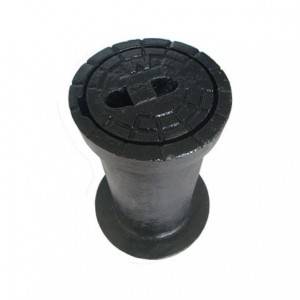
We usually perform being a tangible workforce making sure that we will give you the most beneficial excellent plus the finest selling price for Grooved Tee Fittings, Iron Manhole Cover, Disc Linear Motion Coupling, It using the world's leading system for reliable operation, a low failure rate, it suitable for Argentina customers choice. Our company is situated within the national civilized cities, the traffic is very convenient, unique geographical and economic conditions. We pursue a people-oriented, meticulous manufacturing, brainstorm, build brilliant" business philosophy. Strict quality management, perfect service, reasonable price in Argentina is our stand on the premise of competition. If necessary, welcome to contact us by our website or phone consultation, we'll be happy to serve you.